How to Keep a Water Tank From Freezing Before Winter Hits
Every winter, somewhere in the country, a water system gets caught off guard. A tower ices over in Iowa. An overflow line freezes solid in North Carolina. A fire protection tank sits stagnant for weeks and develops a lid of ice that nobody notices until it is too late. These are not freak events. They are predictable outcomes of systems that were never set up to handle real cold.
With that in mind, how do you keep water tank from freezing? Keep reading to learn more.
Why Large Water Storage Tanks Freeze in Cold Weather
Chapter 10 of the American Water Works Association (AWWA) Manual M42 identifies three main categories of problems that can lead to water tank freezing: improper specification, static water conditions, and overflow.
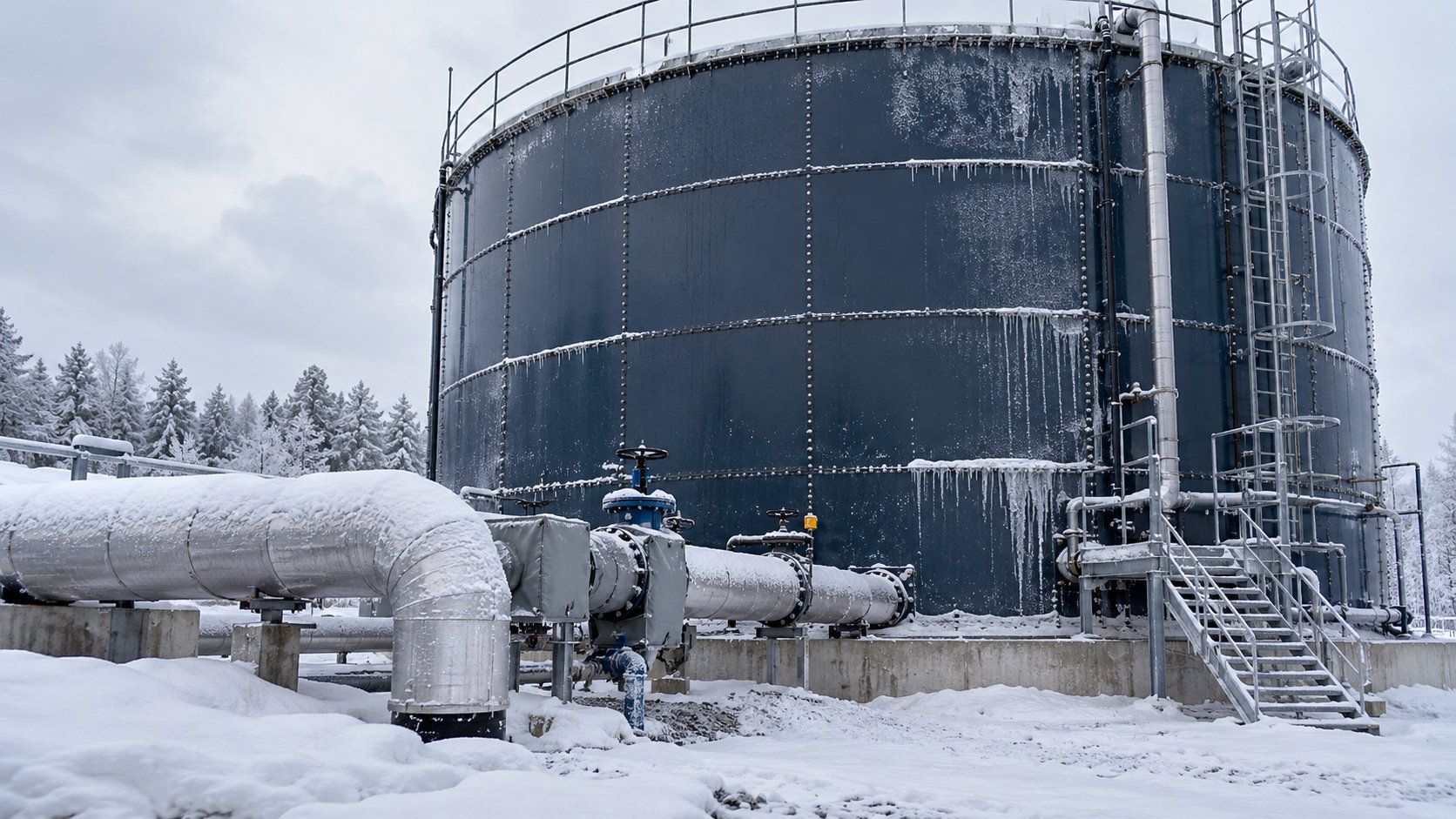
It all begins with prolonged exposure to harsh weather conditions, such as wind and freezing temperatures. This can lead to ice formation at the tank's surface and around the perimeter before freezing the water inside.
Another thing to keep in mind when it comes to water freeze tank protection is the structure's hardware. Components like pipes and pump connections can harbor ice during cold temperatures, especially when there is a leak.
Then there is the root cause. A system that was never specified for cold-weather operation will struggle regardless of how well crews maintain it.
Design the Tank System for Cold-Weather Operation
How to keep a water tank from freezing is a question you should ask even before installing the structure. For fire protection water tanks, NFPA 22 provides requirements for heating and freeze protection. Municipal potable water tanks follow different design standards, but the need to protect vulnerable components remains. In cold climates, smaller inlet and outlet lines may require additional water tank freeze protection.
After the tank's design, pay attention to the foundation. It should be engineered to account for site-specific soil conditions, frost depth, and potential freeze-thaw cycles to maintain structural stability during cold weather.
Structural loads belong in the same conversation. Roof designs and anchoring systems should be evaluated against site-specific snow and wind loads and verified against applicable engineering standards and manufacturer specifications.
Then think about January. Someone will have to reach the valves, vents, and appurtenances in bad weather. Build that access into the layout. If insulation increases the tank's overall dimensions, pad sizing, berms, and clearances should account for the additional space.
Use Insulation to Reduce Heat Loss
Steel is tough, but it also pulls heat away fast. That’s why steel tanks usually need some kind of insulation if they’re going to deal with cold weather and avoid ice damage.
A tank with thin or missing insulation will struggle to hold temperature once the weather starts swinging hard. On bigger above-ground bolted tanks, insulation slows heat loss from the shell, roof, nozzles, and the connections that matter most. The water inside stays closer to its temperature even through long cold nights.
Size helps here too; larger tanks generally cool more slowly because they hold a greater volume of water relative to their exposed surface area. That’s one reason elevated tanks may not always require insulation around the entire structure. However, ice can still form near the water surface during prolonged cold weather. The material you pick matters. Closed-cell foam offers good thermal resistance and helps limit moisture absorption. On that note, a product with a higher R-value per inch can outperform a thicker, less efficient one.
Pay attention to the roof; most of the heat wants to leave that way. In milder climates, a lighter wrap can be enough. In places that stay cold for weeks, you’ll want higher R-value insulation, and often some heat with it.
Add Heating or Heat Tracing Where Required
Some tanks need an active heat source if they’re going to stay usable. This shows up most when temperatures drop well below freezing or when the water has to sit for long stretches without anyone drawing from it.
Purpose-built tank heating systems can help maintain water temperatures during extended periods of cold weather. Depending on the tank design and operating conditions, heating elements or heat-tracing systems can be installed alongside insulation to reduce the risk of freezing. The appropriate solution should be selected based on the tank's size, configuration, and heating requirements.
The tank is only part of it. Exposed pipework often needs self-regulating heat-trace cable, and valves, pump connections, and control lines need protection that fits how they’re built. Insulation helps hold onto the heat those systems put out.
Protect Piping, Valves, Overflow, and Appurtenances
Pipes, fittings, and valves can ice up solid while the tank itself is still fine. That’s what takes the system offline. Exposed pipework can be wrapped in closed-cell polyethylene or elastomeric foam, usually half an inch to an inch thick with weather-resistant jacketing.
How thick you go depends on the climate and how the line is run. Heat tracing may still be needed if insulation alone won’t cut it. Valves and fittings need extra attention. Their shapes leave spots that are easy to leave bare. The cable has to work with the pipe and be installed the way the manufacturer says. Overflow lines get overlooked.
Manage Water Turnover and Circulation
Water that sits still freezes easier than water that keeps moving. Regular turnover brings new water in and pushes stored water out. Mixing can also cut down on the temperature difference between warmer and colder layers. Municipal tanks often get help from daily demand.
Meanwhile, overfilling, leaks, or unnecessary discharge can feed ice around overflow pipes, vents, and roof openings. Watch levels and look into changes that normal use doesn’t explain. Circulation helps, but it’s not a guarantee. Low-turnover systems can still need insulation and active heating to get through a hard freeze.
Plan Winter Inspection and Maintenance
Check roof areas, seams, ladders, and accessible structural parts. Foundations and anchoring systems are worth a look after bad weather too. Temperature sensors can flag when conditions are getting close to a problem. They’re only useful if someone acts on the alert. A short written procedure should say who gets the alerts, who checks the equipment, and what happens if a heater fails or a blockage is suspected.
What to Do If Ice or Freeze Damage Is Suspected
A drop in flow, visible ice, or an unexpected change in tank level can mean something’s wrong. Identify the affected component and don’t force pumps to run against a frozen line. That can damage equipment or make the problem worse. Open flames and unapproved direct heat should never be used to thaw a tank or its pipework.
Most importantly, have qualified professionals inspect the affected components for damage, leaks, and structural issues. Draining may be necessary for a more detailed inspection or repairs.
Conclusion: Freeze Protection Is a System Design Issue
A large water tank doesn’t have to freeze solid for winter conditions to cause problems. An iced-up outlet or a blocked overflow can be enough to disrupt service. How to keep outdoor water tank from freezing means matching the protection to the climate and how the system is actually used. Proper tank specs, insulation, heating where it’s needed, protected pipework, sensible water management, and regular inspections all play a part. Doing that planning before winter gives operators a chance to fix weak spots while the equipment is still easy to reach.
FAQ
About the author

Energetic and dedicated Operations Leader with more than 20 years of demonstrated results driven experience in fast paced manufacturing environments. Proven skills in building and directing strong teams to achieve challenging objectives.
View all postsRecent Posts
Choosing the Right Dry Bulk Storage Tank: 6 Key Questions
Grain Storage After Harvest: Control Moisture, Temperature & Airflow
What Is Water Conservation? Importance, Storage & Tanks
What to Know Before Building a Tank Foundation