Selecting the Right Dry Bulk Storage Tank: Start by Asking the Right Questions
A request for a new dry bulk storage tank often begins with a number: “We need 100,000 cubic feet,” or “We need enough capacity for three truckloads.” Capacity matters, but it should not be the only starting point. A tank can provide the required volume and still fall short operationally if the material does not discharge consistently, the venting system cannot support the filling method, or the outlet does not match the equipment below it.
A better approach begins with the process. What material will enter the tank? How will it arrive? What condition will it be in? How quickly must it leave? What equipment will receive it next? The tank, hopper, filling method, discharge equipment, controls, and structure should be evaluated as one connected system.
1. What Material Will the Tank Store?
A material name alone rarely provides enough information for design. “Lime,” “sand,” or “plastic resin” can describe products with very different particle sizes, moisture levels, bulk densities, and flow characteristics. Those differences may affect structural loading, hopper geometry, outlet configuration, interior finish, and withdrawal equipment.
Useful project data may include loose and compacted bulk density, particle-size distribution, moisture content, operating temperature, abrasiveness, corrosiveness, and any tendency to cake, bridge, segregate, or become aerated. The expected range of conditions matters too. A powder that flows readily when dry may behave differently after absorbing moisture or remaining under consolidation.
When product flow is critical or material behavior is uncertain, representative bulk-solids testing may be appropriate. Properties such as cohesive strength, wall friction, compressibility, and permeability can help engineers evaluate hopper geometry, surface finish, outlet size, and flow pattern. Measured data can reduce reliance on generalized assumptions.
2. How Much Usable Capacity Is Required?
Tank volume and stored mass are not interchangeable. The same vessel can hold different tonnage depending on the product’s bulk density and how it settles during filling. A useful design basis should identify both the required storage mass and the density range used to calculate volume.
It is also important to distinguish gross volume from working capacity. Space above the normal material level may be needed for conveying-air disengagement, dust collection, level control, and overfill protection. Hopper geometry and minimum operating inventory may further affect usable storage.
Delivery and consumption patterns should be considered alongside the volume calculation. How many deliveries should the tank accommodate? How much reserve is needed? Is it intended to receive complete loads, protect against supply interruptions, or buffer a continuous process? The answers can produce a more practical capacity requirement than a single volume target.
3. How Will the Tank Be Filled?
The filling method influences the inlet arrangement, venting requirements, tank connections, controls, and supporting structure.
For pneumatic delivery, relevant information may include conveying airflow, pressure, material rate, line size, routing, and unloading sequence. Air entering with the product must be managed through an appropriately engineered venting or filtration system. Vent equipment should be evaluated for actual filling conditions, expected dust loading, and maintenance requirements.
Mechanical filling creates different considerations. Belt conveyors, screw conveyors, and bucket elevators affect layout and may introduce equipment loads, off-center filling, or product segregation. Inlet location and product velocity may also influence wear and material degradation.
The intended operating sequence should be discussed before equipment is selected. Level indication, overfill protection, fill-line selection, pressure or vacuum protection, and unloading controls may need to function as an integrated system. The responsible project team should develop the control strategy around the process and applicable requirements.
4. How Must the Material Discharge?
The tank must support the downstream process. What will it feed: a batch scale, mixer, packaging line, truck loadout, screw conveyor, rotary valve, or pneumatic conveying system? Minimum, normal, and peak discharge rates should also be established.
These requirements help determine the appropriate flow pattern. In mass flow, material is intended to move throughout the vessel during discharge, supporting first-in, first-out turnover and limiting stagnant regions. In funnel flow, the product moves through a channel while some material near the walls remains stationary until the level falls. Funnel flow can be suitable for certain coarse, free-flowing, non-degrading materials. The correct approach depends on the product and operating goals.
Cone slope alone does not determine how a bulk solid will behave. Hopper geometry, wall friction, outlet dimensions, surface condition, and feeder design all influence discharge performance. Flow aids, such as aeration or vibration, should be considered only when supported by the material characteristics and overall system design.
5. What Site and Structural Conditions Apply?
A dry bulk tank is affected by more than the static weight of its contents. Filling and discharge may create nonuniform pressures, while platforms, conveyors, piping, dust collectors, and support steel can transfer additional loads into the structure.
Site-specific wind, seismic, and snow criteria, along with operating temperature, elevation, soil conditions, and applicable codes, should be identified early. Responsibility for foundation design, anchor details, and structural interfaces should also be clearly assigned. Early coordination can help limit redesign and site delays.
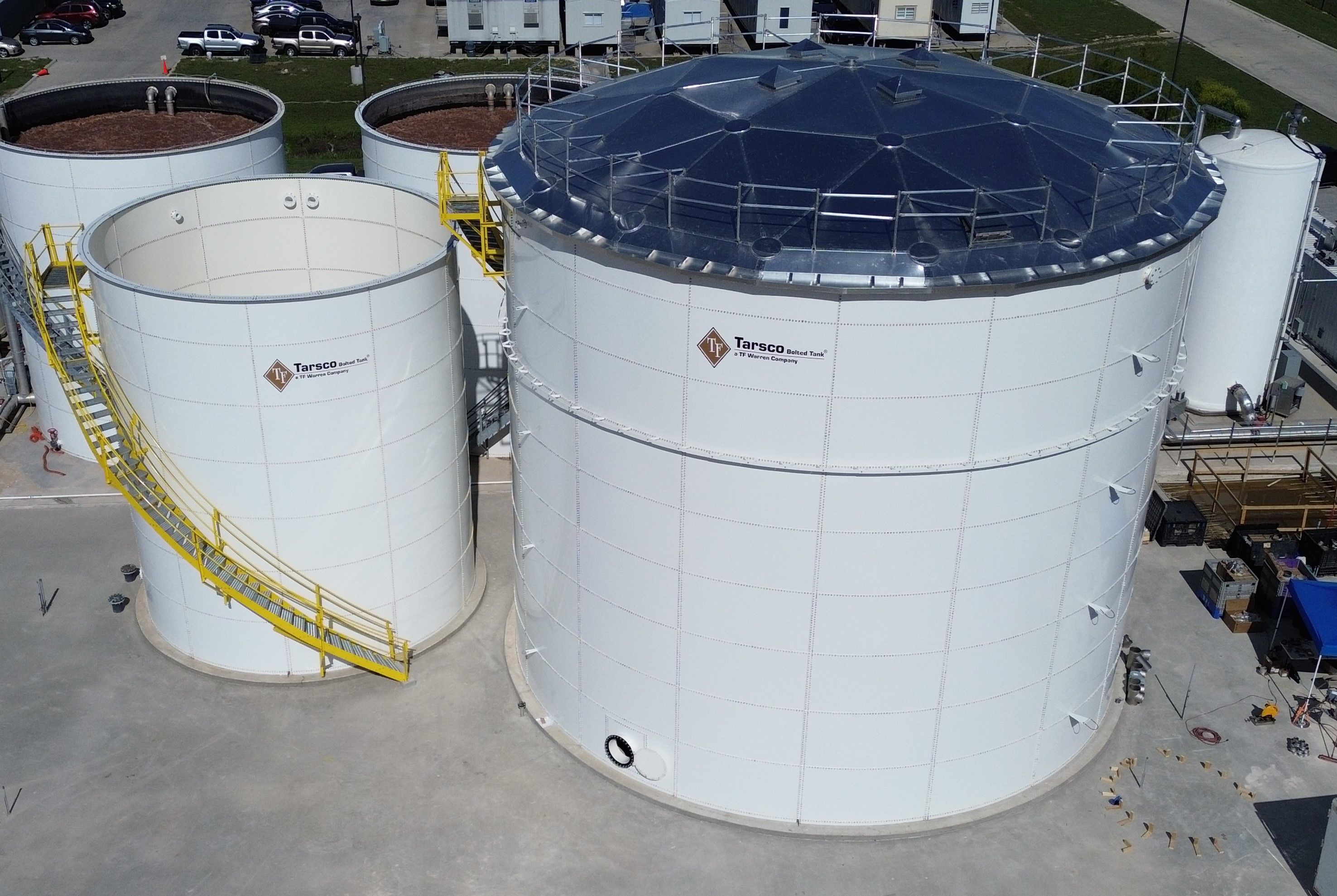
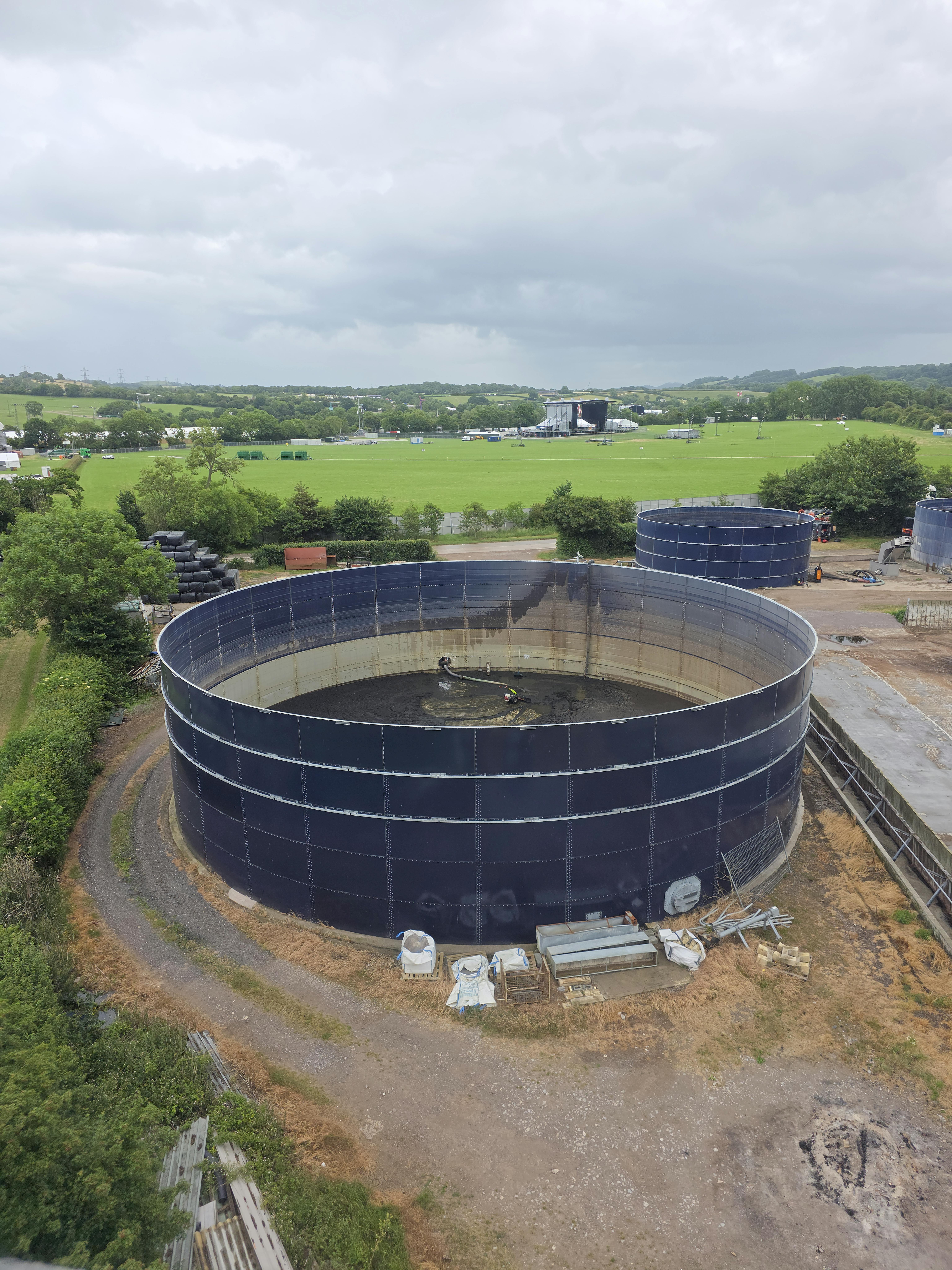
Construction access is another practical consideration. Crane space, laydown area, overhead obstructions, plant restrictions, and delivery routes may influence tank diameter, erection method, and schedule. Bolted construction can be useful where transporting a large shop-welded vessel would be impractical, because factory-finished panels can be delivered and assembled on site.
6. Which Accessories, Safety Provisions, and Maintenance Features Are Needed?
Accessories should be considered during initial design. Level instruments, vents, dust collectors, pressure and vacuum protection, access doors, ladders, stairs, platforms, sampling points, and inspection ports may affect nozzle placement and structural details. Late additions can create layout conflicts or make routine service more difficult.
Material hazards also require project-specific review. Some products can generate combustible dust or present other handling risks under certain conditions. Where relevant, the owner and qualified safety professionals should determine whether a formal hazard analysis is required and identify the safeguards, procedures, and code requirements appropriate to the facility. A tank specification is not a substitute for a facility-wide safety review.
Maintenance access should be evaluated from the operator’s perspective. Serviceable components need appropriate access, clearance, and isolation provisions. Planning for inspection and maintenance during design can support safer work practices and reduce avoidable downtime.
Ask the Questions Before the Specification Is Finalized
A successful dry bulk storage project is not defined by storage volume alone. Performance depends on whether the complete system can receive material at the intended rate, maintain suitable storage conditions, and deliver product consistently to the next process.
Tarsco Bolted Tank brings bolted-tank expertise and decades of dry bulk storage experience to the selection process. Examining the material, operating sequence, site conditions, and surrounding equipment helps the project team make informed decisions about capacity, flow pattern, hopper and outlet configuration, coatings, accessories, structural criteria, and erection planning.
For a new facility, storage expansion, or replacement project, early coordination among the owner, engineer, tank supplier, and material-handling specialists can prevent gaps between the written specification and actual operating needs. Selecting the right dry bulk storage tank starts with asking the right questions before the design is locked in.
About the author

Energetic and dedicated Operations Leader with more than 20 years of demonstrated results driven experience in fast paced manufacturing environments. Proven skills in building and directing strong teams to achieve challenging objectives.
View all postsRecent Posts
Grain Storage After Harvest: Control Moisture, Temperature & Airflow
What Is Water Conservation? Importance, Storage & Tanks
What to Know Before Building a Tank Foundation
Emergency Water Storage Tanks: Planning Before a Water Outage