What Is Fire Protection System Tank Design? Capacity & Codes
A fire protection water tank is more than a storage vessel. It provides a dedicated water supply that supports a fire protection system when the available municipal source cannot deliver the required flow or reliability. Effective tank design begins with system demand, site conditions, and code requirements, not simply tank size.
What Is a Fire Protection System and Why Does Water Storage Matter?
When project planning begins, one of the first questions that comes up is deceptively simple: what is fire protection system designed to do?
At its heart, the answer is straightforward. A fire protection system may detect, control, or suppress a fire while helping protect occupants and support safe evacuation. That means bringing together sprinklers, standpipes, hydrants, piping, valves, monitors, and pumps that deliver water at the required flow and pressure. Each piece has its job.
The tank holds what the pump needs. The pump pushes it through the pipes. The pipes deliver it to the sprinklers and hydrants. Get the storage right, and the rest of the system has a fighting chance. Get it wrong, and you've built an impressive set of components that won't do what you need them to do.
When Is a Fire Protection Water Tank Needed?
Not every property requires a dedicated fire water tank. Many commercial buildings receive enough water from the municipal system to satisfy both pressure and flow requirements.
A dedicated tank is typically considered when the available water supply cannot support the required fire demand. This commonly occurs at remote facilities, rural properties, industrial plants, manufacturing sites, distribution centers, and large warehouses where public infrastructure may be limited or unable to sustain the necessary fire flow.
Some facilities also require higher water demands because of extensive sprinkler systems, standpipes, or private hydrants. In these situations, relying entirely on the municipal supply may not provide the level of protection required by the project.
A dedicated tank provides a dependable reserve that remains available throughout a fire event. Working together with the fire pump and distribution system, it helps maintain the flow needed for the fire protection equipment to operate as designed.
How Fire Protection Tank Capacity Is Determined
Choosing the correct tank size involves much more than estimating storage volume. Capacity is determined by evaluating how the complete fire protection system will perform during an emergency.
Engineers consider several factors, including required fire flow, operating duration, usable water volume, pump demand, available refill, and any requirements established by the authority having jurisdiction (AHJ). Because every project presents different risks and operating conditions, tank sizing is always based on the specific fire protection system rather than a standard capacity.
Fire Flow and Duration
Anyone researching how to size a fire protection water tank quickly discovers that capacity starts with two basic questions: how much water must the system deliver, and for how long?
Fire flow is the rate at which water must be supplied to control or suppress the design fire. Duration is the length of time that the flow must be maintained. Together, these values establish the base water demand for the system.
In simple terms, the required storage volume is determined by multiplying the required fire flow by the required operating duration. The governing demand depends on the fire protection systems connected to the tank. In some projects, automatic sprinklers determine the required capacity. In others, standpipes, private hydrants, or combined system demands establish the design requirement.
This is why questions such as “How to calculate fire water tank capacity?” or “How to set the capacity of the fire water tank?” do not have a universal answer. The final storage requirement depends on the specific fire protection systems, hydraulic calculations, applicable standards, and local approval requirements.
Usable Water vs Total Tank Volume
One of the most common planning mistakes is assuming that every gallon stored inside a tank is available for firefighting.
In practice, total storage capacity and usable capacity are not always the same. Tank outlet elevation, suction arrangements, dead storage, and freeboard can all reduce the volume that is actually available to the fire protection system.
Designers therefore evaluate the tank's usable water volume rather than relying solely on its nominal capacity. Where permitted, a reliable refill may also contribute to the available supply if the refill source can provide sufficient water during the required operating period and the arrangement is accepted by the AHJ.
Another question often raised during project planning is, “How much water does a fire tanker hold?” Fire apparatus carry their own onboard water supply, but those volumes vary by vehicle and are intended to support firefighting operations rather than replace a dedicated fire protection water tank for fixed suppression systems.
Codes and Standards That Shape Fire Tank Design
Fire protection tank design is guided by recognized standards as well as local code requirements. These documents establish how tanks should be designed, installed, inspected, and maintained so they can provide a dependable water supply throughout their service life.
The applicable requirements vary by project. In addition to national standards, local building officials, fire departments, insurance carriers, and the authority having jurisdiction (AHJ) may establish project-specific expectations. Reviewing these requirements early helps ensure the water supply will support the fire protection system under anticipated fire conditions.
NFPA 22 for Fire Water Storage Tanks
NFPA 22, Standard for Water Tanks for Private Fire Protection, is the primary reference for tanks used as private fire water supplies. It establishes minimum requirements for the design, construction, installation, and maintenance of water tanks and their accessory equipment.
The standard addresses topics such as tank types, foundations, pipe connections, filling arrangements, and protection against freezing. It also covers gravity tanks, suction tanks, pressure tanks, and towers used for private fire protection.
One important point is that NFPA 22 does not prescribe a fixed tank capacity. Instead, the required storage volume is based on the demand of the fire protection system the tank serves. Where permitted by the applicable requirements and accepted by the AHJ, a reliable refill source may be considered as part of the available water supply.
NFPA 25 for Inspection and Maintenance
A fire protection tank isn't something you install and forget. If you want that water to be there when you need it, you have to plan for what happens after the concrete cures and the paperwork gets filed.
That's where NFPA 25 comes in. The standard lays out the rhythm of routine inspection, testing, and maintenance that keeps a tank from becoming a very expensive liability. Regular inspection can identify corrosion, leakage, low water levels, equipment problems, and structural deterioration before they affect system reliability. Low water levels, failing equipment, and gradual deterioration may develop over time. Without scheduled inspection and testing, these conditions may remain unnoticed until system performance is affected.
Key Design Considerations Beyond Capacity
Selecting the correct storage volume is only one part of fire protection tank design. The tank must also fit the site, support emergency operations, and integrate with the rest of the fire protection system.
Location and Fire Department Access
Tank location influences both system performance and emergency response.
The site should provide clear access for fire department vehicles, along with convenient access to hydrants, fire department connections, or drafting points where applicable. Adequate working space around the tank also allows inspectors and maintenance personnel to safely access the structure and associated equipment.
Good site planning includes proper drainage around the foundation and sufficient clearance from nearby structures where required by local regulations.
Pumps, Piping, and System Integration
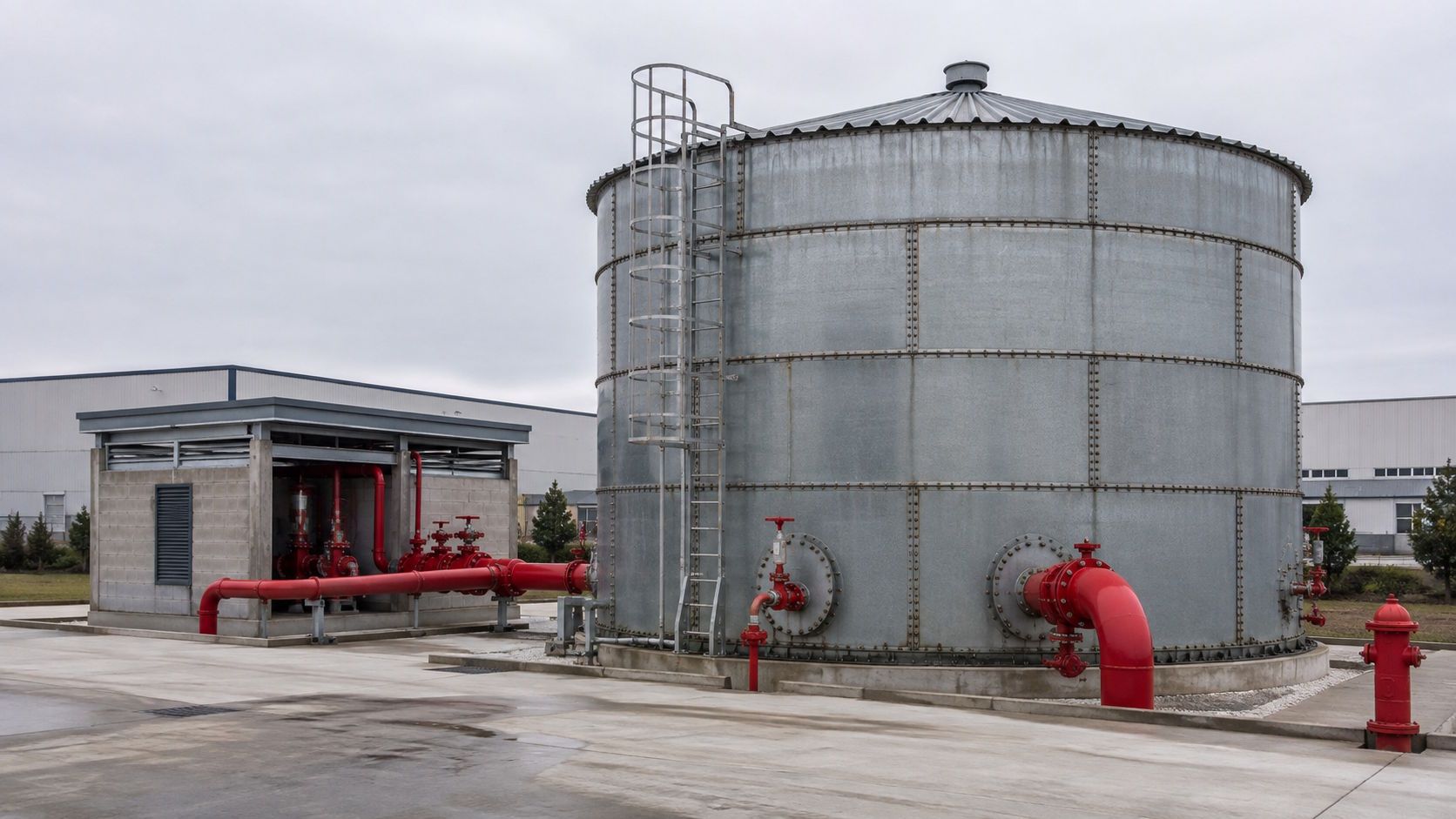
A fire protection tank doesn't operate in isolation. It is part of an interconnected system: pump, suction piping, valves, controls, sprinklers, standpipes, hydrants, and monitoring equipment. Each component depends on the others, and the whole chain is only as strong as its weakest link.
For ground-level and underground tanks, the dynamic is straightforward: the tank supplies the water, and the pump supplies the pressure. But straightforward doesn't mean simple. The coordination between these elements has to be precise. Suction piping must be sized correctly. Valve placement has to allow for both operation and maintenance. Controls need to respond without delay.
The takeaway is this: design the tank as part of the complete system, not as a standalone structure. When everything is planned together, the pieces fit. When they're planned in isolation, you end up with mismatched components and compromised performance.
Climate and Site Conditions
Geography has a say in every design decision.
In colder climates, freezing is the obvious threat. Water expands when it freezes, and that expansion can crack pipes, split fittings, and render a tank useless. Insulation helps. Heating systems help. But the right solution depends on the specific temperatures the installation will face, not just the regional averages.
Beyond temperature, there's the structural reality of the site. Wind loads, seismic activity, soil conditions, drainage patterns, and corrosion exposure all affect the design and determine whether the tank remains structurally stable, sealed, and functional over time. And don't forget access: if inspectors can't get to the tank safely, maintenance falls off, and the tank’s condition becomes difficult to assess reliably.
Why Bolted Steel Tanks Work Well for Fire Protection
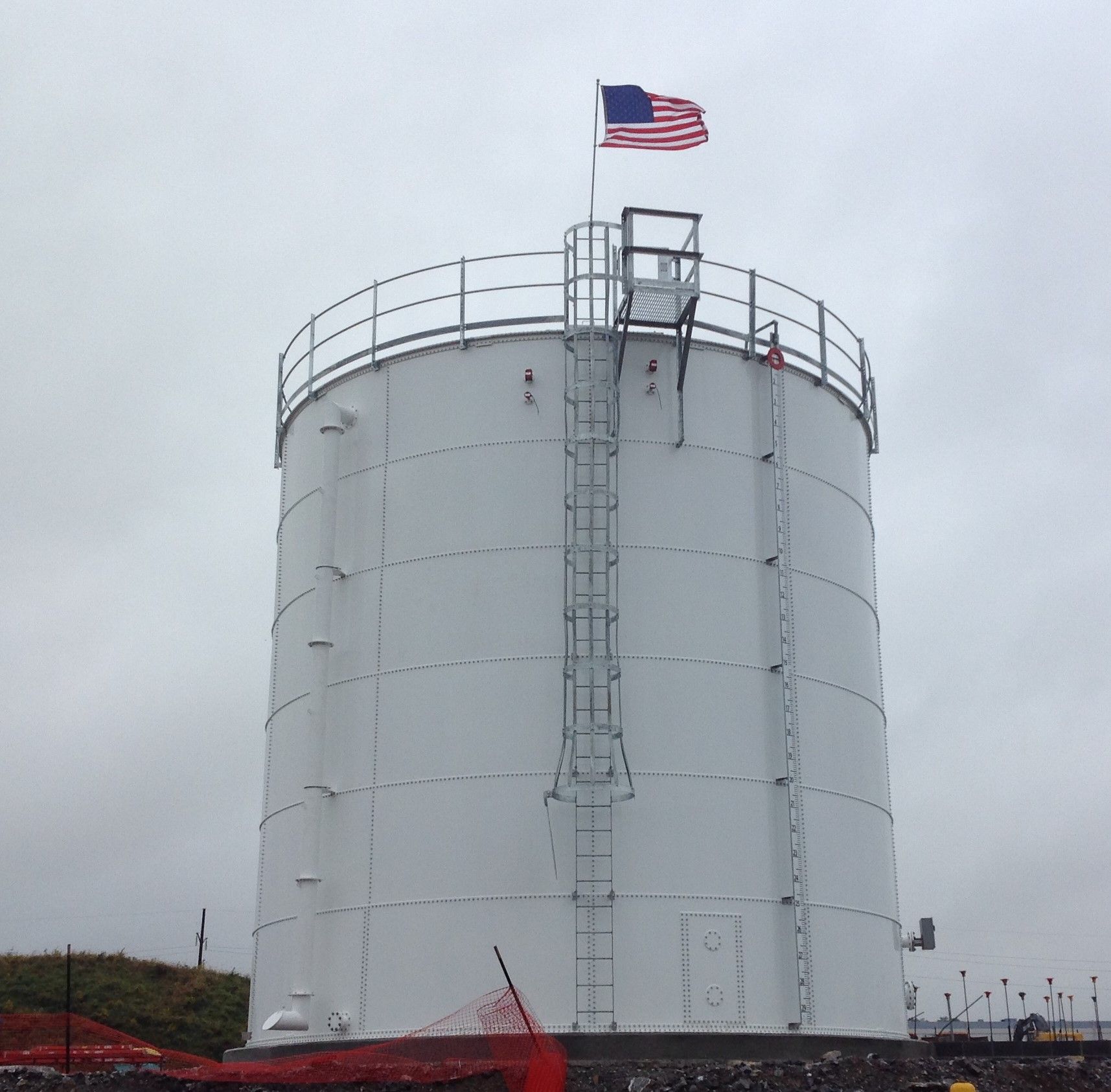
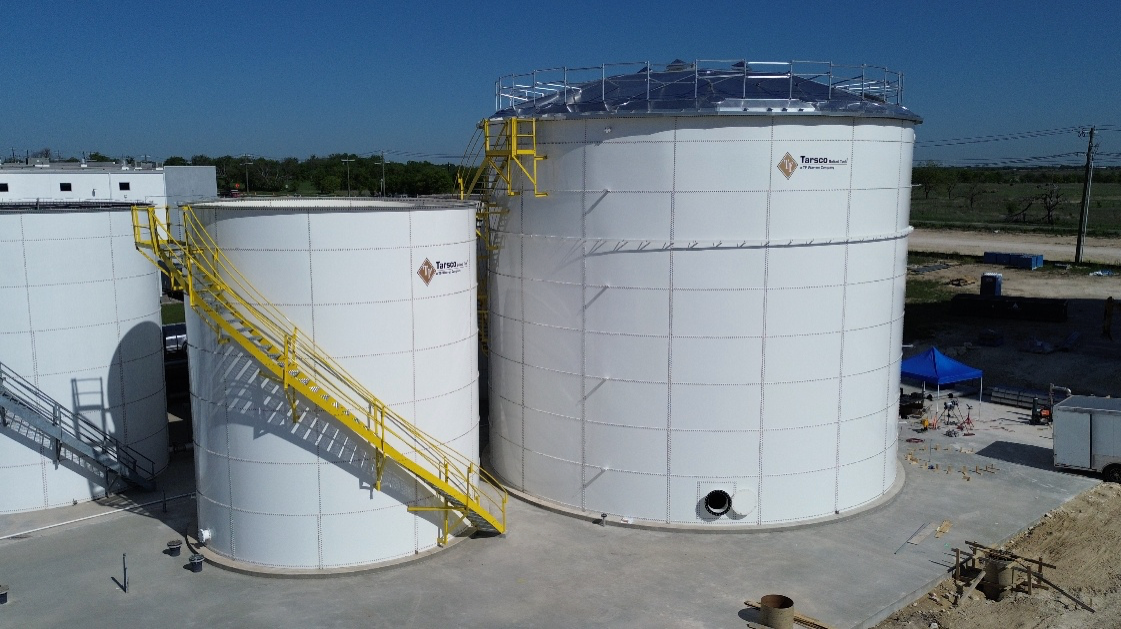
Bolted steel tanks are widely used for fire protection because they can accommodate a broad range of storage requirements while remaining practical to transport and assemble.
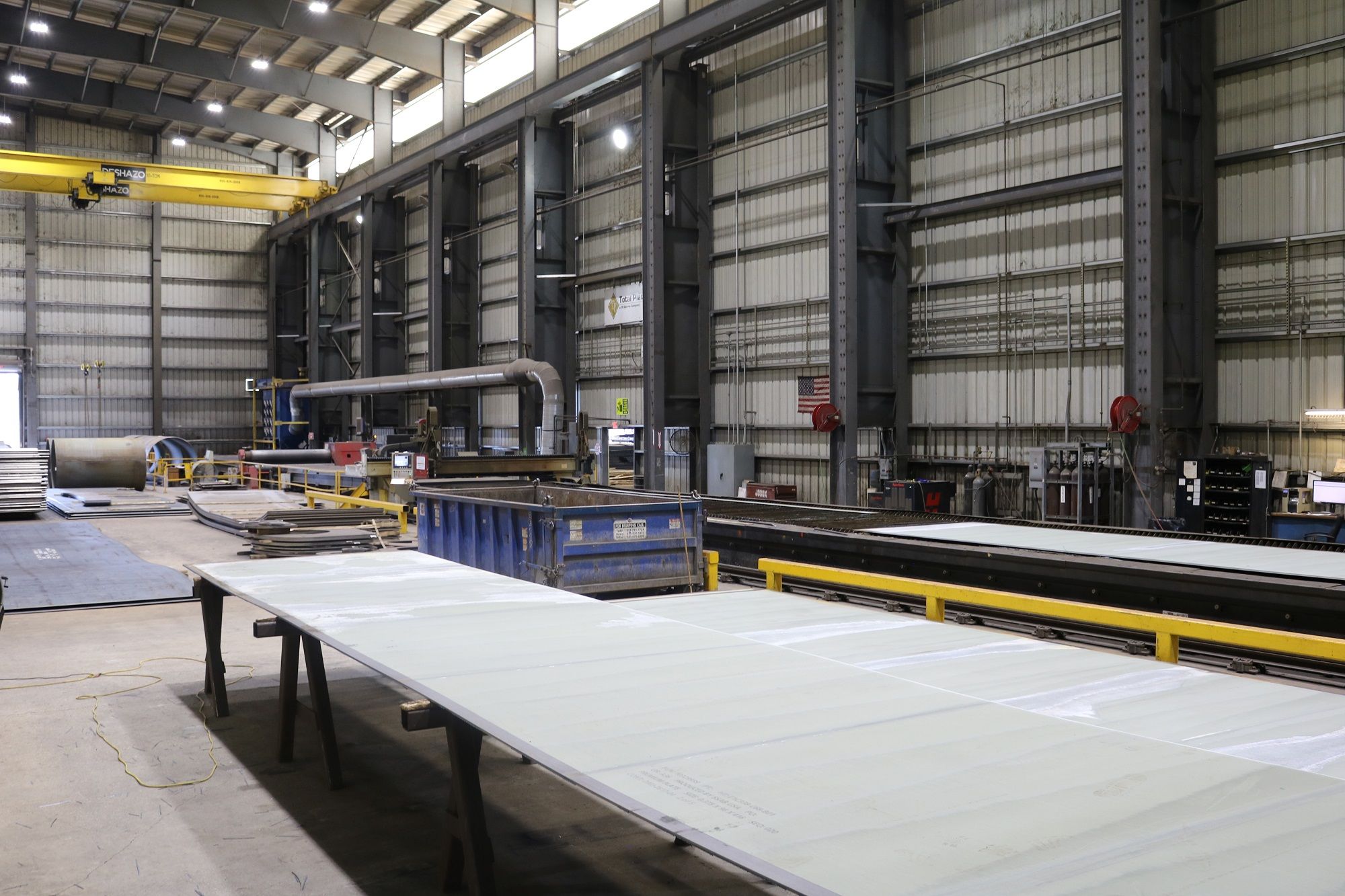
Their modular construction allows the tank to be erected on site, making them suitable for projects where shipping a fully welded tank is impractical. Capacity can be matched to the fire protection system's calculated demand, helping avoid unnecessary oversizing.
Appropriate protective coating systems can improve corrosion resistance and service life. Combined with proper maintenance, these characteristics support long-term serviceability.
Common Fire Tank Planning Mistakes to Avoid
Several avoidable mistakes can affect the performance of a fire protection water tank.
One of the most common is selecting a tank before completing the fire protection system calculations. Storage volume should always be based on required fire flow, operating duration, usable water volume, refill assumptions, and applicable code requirements.
Other common oversights include assuming the tank's total capacity is fully usable, overlooking maintenance access, and treating the tank as a separate project from the pumps, piping, and fire suppression system.
Early coordination among the design team, fire protection engineer, and AHJ helps reduce these issues and supports a more reliable installation.
Conclusion: Fire Tank Design Starts With System Demand
Fire protection tank design begins with the required fire flow and operating duration. It must also account for usable storage, refill capability, site conditions, system integration, and applicable codes and standards.
A properly designed tank works with pumps, piping, valves, hydrants, and sprinklers to provide a dependable water supply when municipal sources cannot. By following standards such as NFPA 22 and maintaining the system in accordance with NFPA 25, owners can help ensure the water supply remains ready when it is needed most.
FAQ
About the author

Energetic and dedicated Operations Leader with more than 20 years of demonstrated results driven experience in fast paced manufacturing environments. Proven skills in building and directing strong teams to achieve challenging objectives.
View all postsRecent Posts
Choosing the Right Dry Bulk Storage Tank: 6 Key Questions

Grain Storage After Harvest: Control Moisture, Temperature & Airflow
What Is Water Conservation? Importance, Storage & Tanks
What to Know Before Building a Tank Foundation