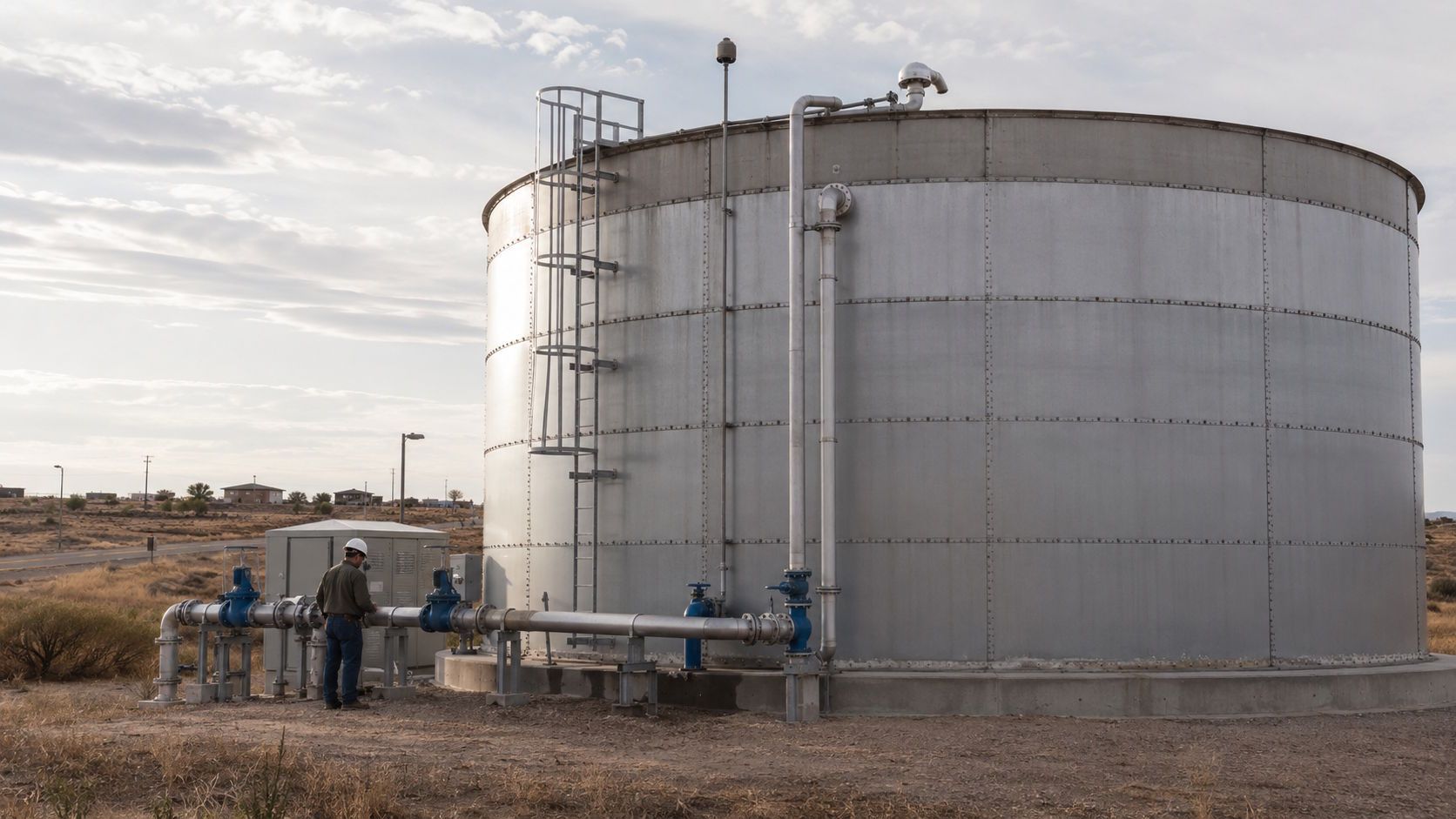
Emergency Water Storage Tanks
Water flows. We turn on taps, and it's there. That's the assumption we all live by, until it isn't.
A main break on a busy street. A power failure that silences well pumps. Wildfires that turn watersheds into ash. Droughts that leave municipal systems dry. Each scenario plays out differently, but they share one thing in common: communities and facilities may have little time to respond.
The line between inconvenience and crisis is preparation. And preparation starts with storage.
Why Emergency Water Storage Matters During Supply Disruptions
Water disruptions don't send warnings. They just happen.
A major break floods a street and cuts service to hundreds of properties within hours. Wildfires can contaminate water sources for weeks or even months. Earthquakes shatter pipelines across entire regions, and routine maintenance can leave facilities dry for days. The causes vary, but the outcome is predictable: properties are left scrambling for water exactly when they need it most.
The question isn't whether disruptions happen. The question is whether you'll have water when they do.
What Happens When the Normal Water Supply Is Interrupted
The impacts of a water outage aren't theoretical. They're immediate and practical.
Drinking water runs out within hours. Sanitation breaks down. This means toilets won't flush, handwashing becomes difficult, and basic hygiene erodes. For facilities like hospitals, schools, and restaurants, operations may halt entirely.
Fire protection is another layer of risk. Many buildings depend on municipal pressure to feed their sprinkler systems. When that pressure drops, fire risk climbs. A building that's already vulnerable from a water outage becomes even more exposed.
Agricultural operations face their own version of the problem. Livestock need daily water, and irrigation-dependent crops can fail during extended dry spells. Rural properties, often without municipal backup, find themselves especially exposed.
What Is an Emergency Water Storage System?
An emergency water storage system is a planned backup water supply. It includes storage tanks, piping, access points, valves, monitoring equipment, treatment considerations, and maintenance procedures.
These systems are designed for specific applications. A residential setup might involve a modest tank connected to household plumbing. Municipal systems can include massive storage facilities with complex distribution networks. The scale varies, but the purpose remains consistent: provide reliable water when primary sources fail.
Emergency Water Storage Tanks vs Small Containers
Small containers, 5-gallon jugs, 55-gallon drums, and similar portable options serve a real purpose for household emergency preparedness. A family can store enough drinking water for a few days using these containers. The CDC recommends storing at least 1 gallon of water per person per day for a minimum of 3 days.
But small containers have limits. Consider a 50-person office building needing 150 gallons for three days. Managing that many individual containers becomes impractical. Scale that need to a 200-person facility or a municipal system, and small containers quickly become impractical.
Larger emergency water storage tanks are necessary for:
- Commercial facilities requiring water for operations, sanitation, and fire protection
- Municipalities supporting entire neighborhoods during outages
- Agricultural operations with livestock and irrigation needs
- Rural and remote properties without municipal water access
- Industrial sites requiring process water that can't be interrupted
These systems can integrate with existing plumbing and, when paired with suitable pumps and controls, support critical functions during emergencies.
How Much Water Should You Store for an Emergency?
Storage capacity depends on several factors. Population served is the starting point; how many people will rely on this water? Daily demand varies by use. Drinking and basic hygiene require different volumes than full facility operations, including showers, food service, and sanitation.
Emergency duration matters too. Short outages might last a day. Larger disasters can disrupt supplies for a week or longer. The appropriate planning period depends on the site, likely outage duration, and access to resupply.
Fire protection requirements can dramatically increase storage needs. Applicable fire codes and system design requirements may specify minimum water volumes, flow rates, and duration. These systems need to maintain pressure and flow during emergencies, meaning storage must account for both daily consumption and fire protection demands.
Climate plays a role. Hot conditions can increase drinking-water demand and water losses. Remote properties may need to store more because resupply is more difficult during emergencies. The intended water use matters; drinking water requires higher quality standards than utility water.
Household Guidelines vs Facility-Level Planning
Household guidance typically starts with per-person daily amounts. The CDC recommends storing at least 1 gallon per person per day for 3 days, with a 2-week supply preferred if possible.
Facility-level planning requires a broader approach. Commercial and municipal systems must account for occupancy levels, sanitation requirements, critical operations that can't pause, pressure requirements for distribution, and refill uncertainty if roads are blocked or municipal water remains unavailable.
A hotel with 100 guests, a hospital requiring ongoing patient care, or a school serving hundreds daily all need storage capacities far exceeding household recommendations.
Choosing the Right Emergency Water Storage Tanks
Tank selection requires evaluating multiple factors. Required volume comes first. Site conditions matter: available space, soil stability, delivery access, and local building codes all influence choices.
The intended water purpose affects material selection. Potable water requires tanks with appropriate liners and coatings that won't leach contaminants. Utility water has different requirements.
Installation timing, permitting, and code requirements should be evaluated together. Some applications demand rapid deployment. Others allow more time for permanent installation. Long-term maintenance should never be an afterthought; tanks that are difficult to inspect or repair become liabilities.
Why Bolted Steel Works for Emergency Water Storage
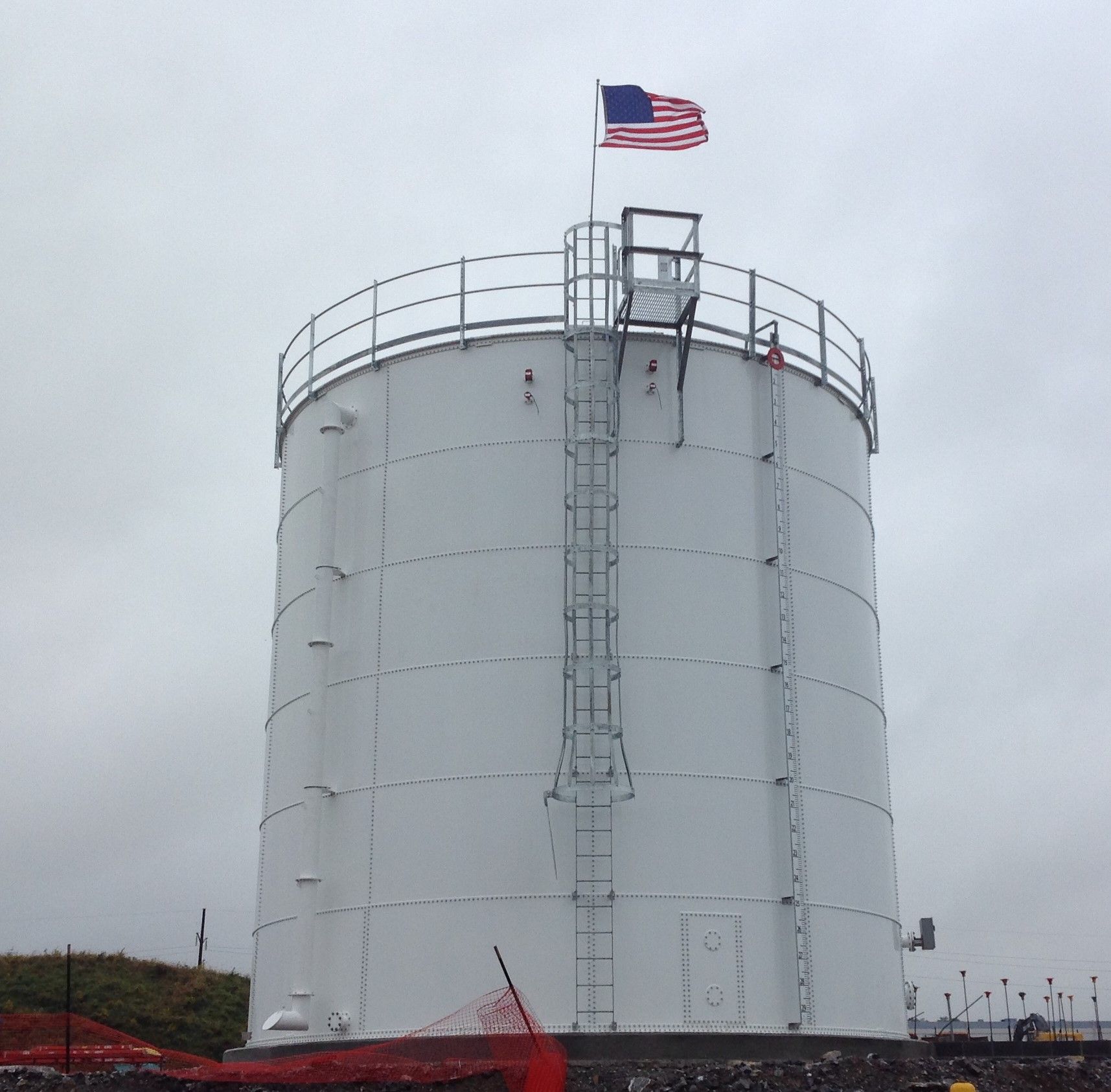
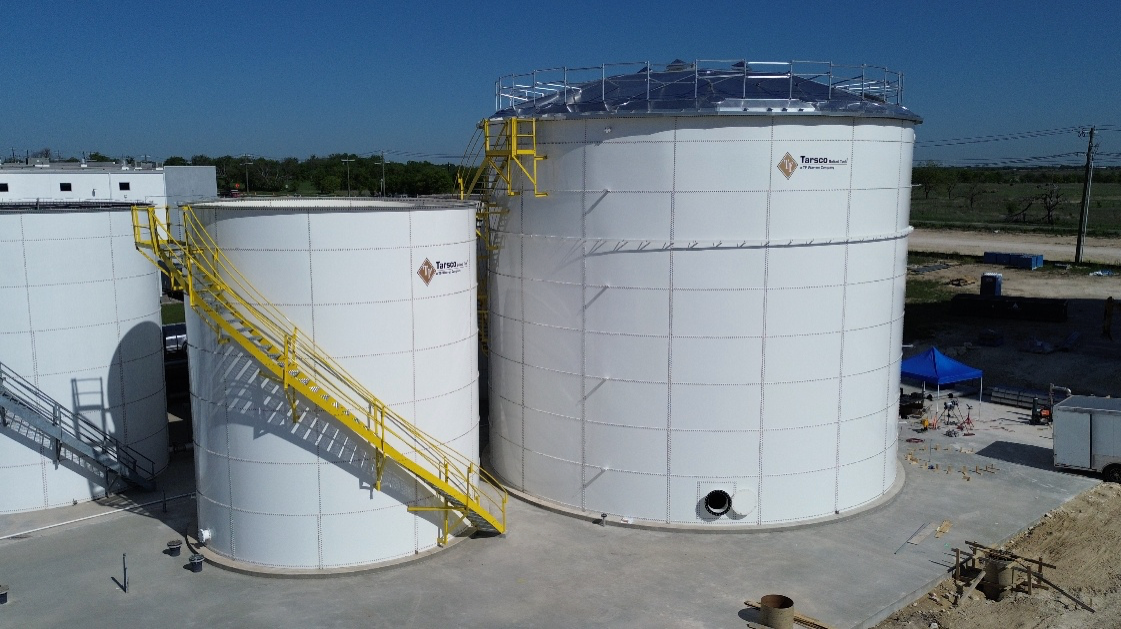
Bolted steel tanks offer distinct advantages for emergency water storage. Their modular construction allows flexible sizing from modest residential needs to massive municipal storage. This versatility makes them suitable for residential, agricultural, commercial, and municipal applications.
Durability is an important consideration. Bolted steel tanks can use galvanized, coated, or lined steel systems selected for the intended environment and water application. For potable-water applications, liners and coatings should comply with applicable drinking-water standards, such as NSF/ANSI 61 where required.
The modular nature means bolted steel tanks can be delivered to remote locations as manageable kits. Their modular components can simplify transport and site assembly, although installation requirements depend on tank size, foundation design, and local conditions. This modular approach can be practical for rural properties, mountainous terrain, and other challenging sites.
With appropriate design, installation, inspection, and maintenance, bolted steel tanks can provide long-term service. In drought-prone or water-scarce regions, properly designed storage can provide a more reliable backup when primary sources are interrupted.
Key Site Planning Factors
Foundation preparation is essential; tanks need stable, level ground that supports the weight of a full water load. Access roads must accommodate delivery vehicles. During emergencies, access also matters for maintenance and potential refilling.
Seismic and wind exposure affect tank design. Bolted steel tanks can be engineered with appropriate anchoring and bracing to withstand these forces. Freeze protection matters in colder climates. Overflow and drainage systems prevent water damage. Security measures may include fencing and locks to prevent tampering.
Proper integration with pumps, controls, piping, and fire protection systems helps ensure water can be delivered where needed.
How to Store Water Long Term for Emergencies
Long-term water storage requires more than filling a tank and walking away. Water quality degrades over time without proper maintenance. Clean storage conditions, suitable tank materials, protected openings, and contamination control all play roles in keeping water usable.
Suitable tank materials help minimize the risk of chemical leaching. Protected openings keep debris and animals out. Contamination control extends to the water source itself. Using clean source water minimizes treatment needs.
Water turnover helps maintain quality. Stagnant water can develop taste and odor issues. Regular turnover keeps the system active and reduces the need for frequent replacement.
How to Prepare Water for Emergency Storage
Proper preparation starts with source water quality. Using clean, potable municipal water provides the best starting point. Well water may require testing before storage.
Cleaning and disinfection before filling are essential. For small household containers, the CDC recommends sanitizing them with a solution of 1 teaspoon of unscented bleach in 1 quart of water, then shaking, draining, and air-drying them before filling. Large tank systems require separate cleaning and disinfection procedures appropriate to their size and intended use.
For larger tank systems, protected vents and hatches prevent contamination during use. Backflow prevention devices ensure stored water doesn't flow backward into the supply line.
A defined refill or rotation plan keeps water fresh. Water replacement or turnover schedules should be based on system size, water source, treatment approach, usage, and applicable public-health guidance.
Maintenance Checklist for Emergency Water Storage
Backup water storage only works if the system stays ready. Regular maintenance ensures everything functions when needed.
What to Inspect Regularly
Water level monitoring verifies that the tank remains full. If levels drop without explanation, investigate immediately. Valves should operate smoothly and seal properly. Exercise valves periodically.
Pumps need testing and maintenance. Verify they start, run, and deliver appropriate pressure. Check electrical connections and backup power systems.
Vents must remain clear. Access hatches should seal tightly. Coatings and liners need visual inspection for cracks or deterioration. Leaks at connections require prompt attention.
Security measures, freeze protection systems, instrumentation, and monitoring equipment all need regular verification. Backup power connections must be tested to ensure they work when needed.
Water Quality and Turnover
Stored water requires ongoing monitoring. Regular water-quality testing, along with checks for unusual taste or odor, can identify problems before the water is used. For potable water, maintaining an appropriate chlorine residual may be necessary.
A monitoring schedule should be based on water usage, storage conditions, and intended application. NSF/ANSI 61-compliant liners help ensure that materials in contact with drinking water meet applicable health-effect requirements. Biological control still depends on proper treatment, monitoring, and maintenance.
Depending on the type and level of contamination, water that is unsuitable for drinking may still be appropriate for certain non-potable uses, such as toilet flushing.
Conclusion: Emergency Water Storage Is a Resilience Plan
An emergency water storage system is not just a tank. It's a planned backup supply designed around specific water demand, disruption risk, site conditions, maintenance, and long-term reliability.
The planning process requires answering key questions: Who needs water? How much? For how long? Where will it be stored? How will it stay usable? How will the system be maintained?
Answering these questions before an emergency makes all the difference when the primary supply fails. Whether the need is residential, agricultural, commercial, or municipal, emergency water storage can reduce the operational and health impacts of a supply interruption.
FAQ
About the author

Energetic and dedicated Operations Leader with more than 20 years of demonstrated results driven experience in fast paced manufacturing environments. Proven skills in building and directing strong teams to achieve challenging objectives.
View all postsRecent Posts
Choosing the Right Dry Bulk Storage Tank: 6 Key Questions

Grain Storage After Harvest: Control Moisture, Temperature & Airflow
What Is Water Conservation? Importance, Storage & Tanks
What to Know Before Building a Tank Foundation