Water Tank Inspection Requirements for Safe Reservoirs
Understanding water tank inspection requirements can help you go beyond checking a box for regulators. You can avoid leaks, water quality complaints, and structural damage that should have been caught years ago. Whether the reservoir serves a small community or a major industrial facility, periodic, thorough checks separate a reliable asset from a ticking liability.
Why Regular Inspection Matters for Water Reservoirs
Inspections are one of the most effective ways to protect stored water and the tank structure. The AWWA M42 Manual of Water Supply Practices recommends tanks be inspected inside and out at least once every three to five years. But many facilities stretch that to ten years or more because the tank is “out of sight, out of mind.” That gap is where small problems become expensive emergencies.
Here is what a regular water tank inspection does:
Protecting Stored Water Quality
A simple visual inspection can spot a torn vent screen or a hatch that doesn’t seal properly. A closer look with an ROV or a certified diver can reveal sediment hiding floor damage or coating failures just starting to form. Catch it then, and the fix is straightforward. Miss it, and that sediment layer hardens, that coating failure spreads, and the water quality complaint log starts filling up.
Preventing Expensive Structural Problems
When an interior coating delaminates or loses adhesion, the substrate underneath is wide open to corrosion. What could have been a spot repair or a targeted topcoat turns into a full recoat job. That is a six-figure difference on most municipal tanks. Regular inspection catches the small stuff, so you never have to write that big check.
What Can Go Wrong Without Routine Inspections
Skipping inspections does not save money. It just delays the bill, usually with interest. The most common problems found in neglected tanks follow predictable patterns, none of them good.
Corrosion, Coating Failure, and Leaks
When coating fails, steel corrodes. The AWWA D100 standard provides the construction framework, but roof lap joints are not always seal-welded. However, unsealed lap joints on the roof structure are notorious for trapping moisture. Condensation forms, rust bleeds through, and eventually, the interior support structure weakens.
Leaks often start at these same joints or at penetrations. A slow drip might not seem urgent, but every leak introduces oxygen and moisture to areas not designed for them. Over time, pitting accelerates, and the shell’s integrity drops. By the time a leak is visible from the outside, the damage inside has been spreading for years.
Sediment, Biofilm, and Interior Buildup
Over time, sediment buildup traps organic material and provides a surface for biofilm to establish. In drinking water reservoirs, biofilm can harbor bacteria that resist disinfection or release tastes and odors that generate complaints.
Understanding Water Tank Inspection Requirements
There is no single federal standard that says “inspect every tank exactly this way.” Instead, water tank inspection requirements depend on several factors. These include the tank’s age, what it stores, its condition, regulations, past inspection history, and the operating environment.
Drinking Water Tank Inspection Considerations
For any drinking water tank inspection, the focus goes beyond structural integrity. The inspector will verify that coatings and materials in contact with potable water are appropriate for NSF/ANSI 61 compliance.
They will also check for signs of biological growth, verify that access points are secure, confirm vents are screened and intact, and test coatings for adhesion and dry film thickness. If lead-based paint is present, that triggers a whole different level of environmental compliance. A professional inspection report should tell you not just what is broken, but also what conditions could pose water quality or sanitary risks.
Daily Water Tank Inspection Checklist Basics
For many facilities, a daily water tank inspection checklist is not the same as a professional five-year inspection. It is a simpler, operational tool. An operator or field technician walks the site and checks water levels, visible leaks around the foundation or shell, hatch security, the overflow function, any signs of exterior damage, and unusual conditions, such as standing water near the base or new vegetation growth that could indicate a slow leak.
This routine visual sweep is usually quick and does not require confined space entry or specialized equipment. But it creates a record of normal conditions, so when something changes, you notice immediately. It is the first line of defense, and too many facilities skip it.
What a Water Tank Inspection Checklist Should Include
A complete water tank inspection checklist should cover:
Exterior Inspection Points
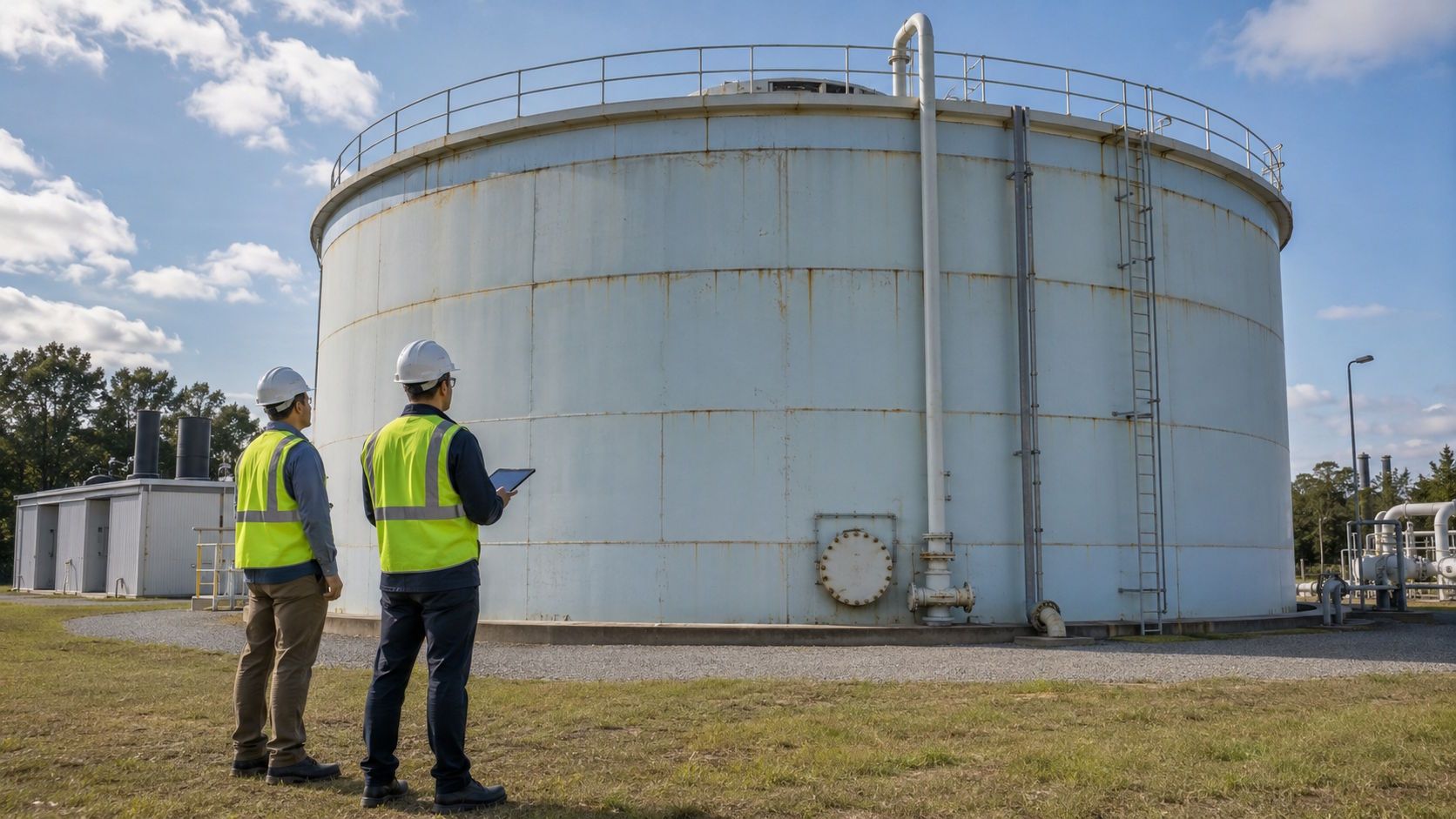
Check for coating blistering, rust staining, or any area where the paint has failed. Inspect the roof for ponding water or damaged edge angles. Also, inspect vents to ensure the screens are intact and the openings are properly oriented to keep rain out.
Next, examine ladders, platforms, and fall protection gear for corrosion or loose connections, and check access hatches to confirm they lock and seal. Most importantly, inspect the overflow pipe to ensure nothing is nesting in it, and walk the foundation for signs of settlement or cracking.
Interior Inspection Points
A professional inspection includes corrosion assessment on the floor, shell, and roof supports. Coating condition is documented with photos, adhesion tests, and dry film thickness (DFT) readings. Sediment depth is measured at multiple points.
The floor is checked for pitting or thin spots. Roof welds and lap joints are examined, especially if not seal-welded. All penetrations and pipe connections get a close look. Any signs of biological growth or unusual staining are also noted. This is the data that drives repair decisions.
How Inspections Improve Maintenance Planning
An inspection without a plan is just a document. The real value comes when you use the findings to build a maintenance strategy that aligns with your budget and risk tolerance.
From Inspection Findings to Action Plan
Once the report is in hand, rank every finding by urgency. Immediate safety issues, such as a structural crack or an unstable ladder, are addressed before the tank goes back into service. Water quality risks, like a failed vent screen or sediment over a certain depth, get scheduled within weeks. Near-term repairs, such as spot coating, touch-ups, or minor weld fixes, go on the six-month plan. Long-term maintenance, like planning for a full recoat within five years, is included in the capital improvement budget.
When a Reservoir Needs Professional Inspection
Some facilities try to handle everything in-house. That works for the daily visual check, but professional inspection requires specific expertise. Bring in specialists when the tank is overdue on its normal cycle, usually three to five years. Call them if you see visible rust staining that was not there before.
Other problems that signal the need for professional assistance include leaks, water quality issues, and storm damage.
Why Professional Documentation Matters
Professional inspection records serve two purposes. First, they create a baseline over time. Compare this year’s DFT readings to last year’s, and you can calculate coating loss rates. Compare floor thickness measurements to predict remaining service life. Second, they support compliance and defend decisions. If a regulator asks why you prioritized one repair over another, you show them the inspection report. If a city council member questions a budget request, the documented findings justify the expense. Good records turn maintenance from a fight into a fact-based discussion.
Conclusion: Regular Inspection Protects Reservoir Safety and Service Life
Consistent water tank inspection catches coating failures before they become corrosion. It finds sediment before it hides floor damage. It also identifies leaks when they are still repairable rather than catastrophic. And it gives owners the information they need to plan budgets, prioritize repairs, and keep the water safe.
More importantly, it buys peace of mind. The next time someone asks what condition the reservoir is in, you will have an answer backed by data, not guesswork. That is the difference between managing assets and just hoping for the best.
FAQ
About the author

Energetic and dedicated Operations Leader with more than 20 years of demonstrated results driven experience in fast paced manufacturing environments. Proven skills in building and directing strong teams to achieve challenging objectives.
View all postsRecent Posts
Choosing the Right Dry Bulk Storage Tank: 6 Key Questions

Grain Storage After Harvest: Control Moisture, Temperature & Airflow
What Is Water Conservation? Importance, Storage & Tanks
What to Know Before Building a Tank Foundation