How to Perform an Oil Tank Inspection: Key Areas to Review
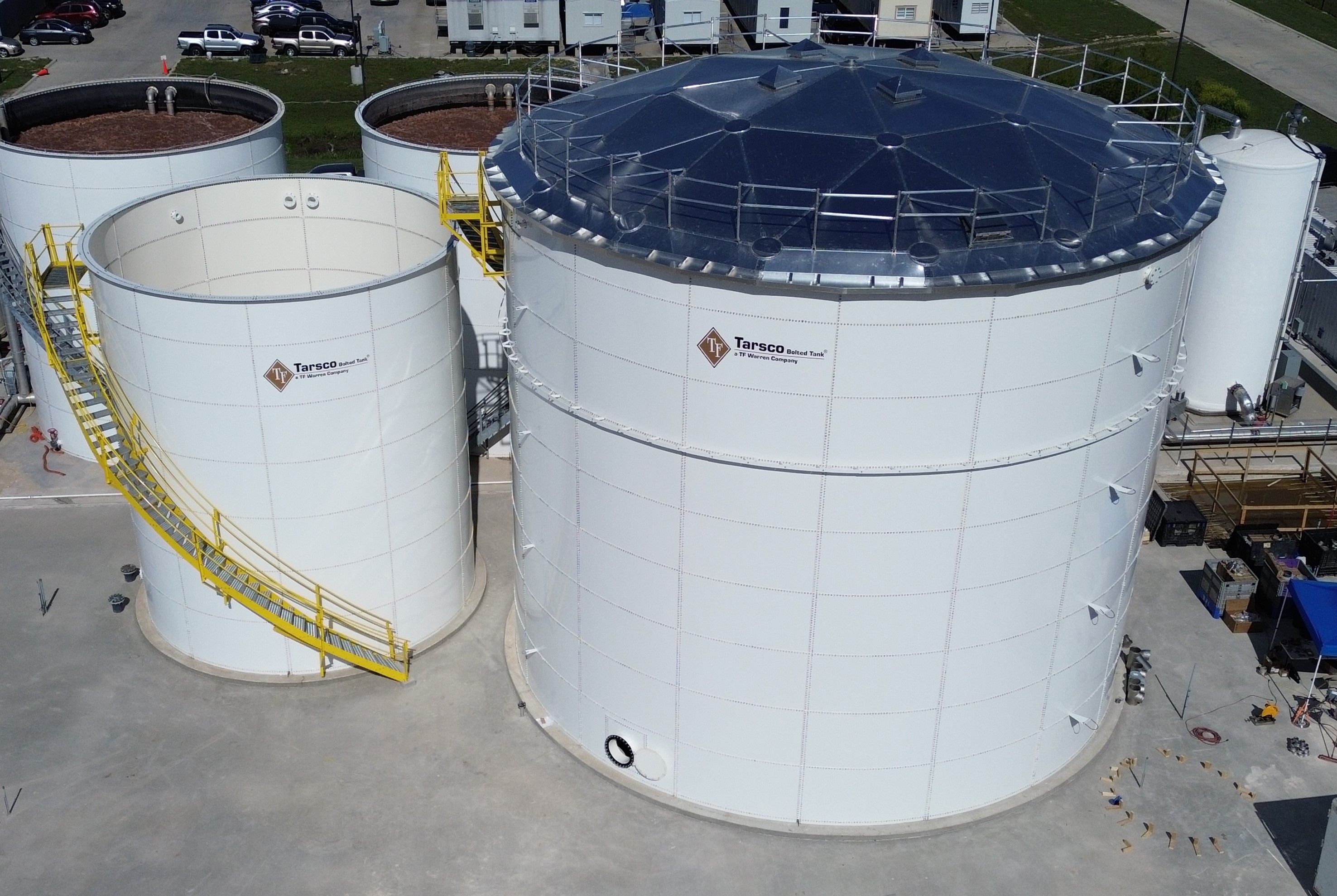
An aboveground oil storage tank is simple to look at but difficult to judge. The shell can look sound while the floor is thinning underneath the structure. A foundation can also look level while the ringwall is quietly washing out. To identify these and other issues early, professional oil tank inspections are essential.
The U.S. Energy Information Administration forecasts that U.S. crude oil production will average approximately 13.8 million barrels per day in 2026.
What Is an Oil Tank Inspection?
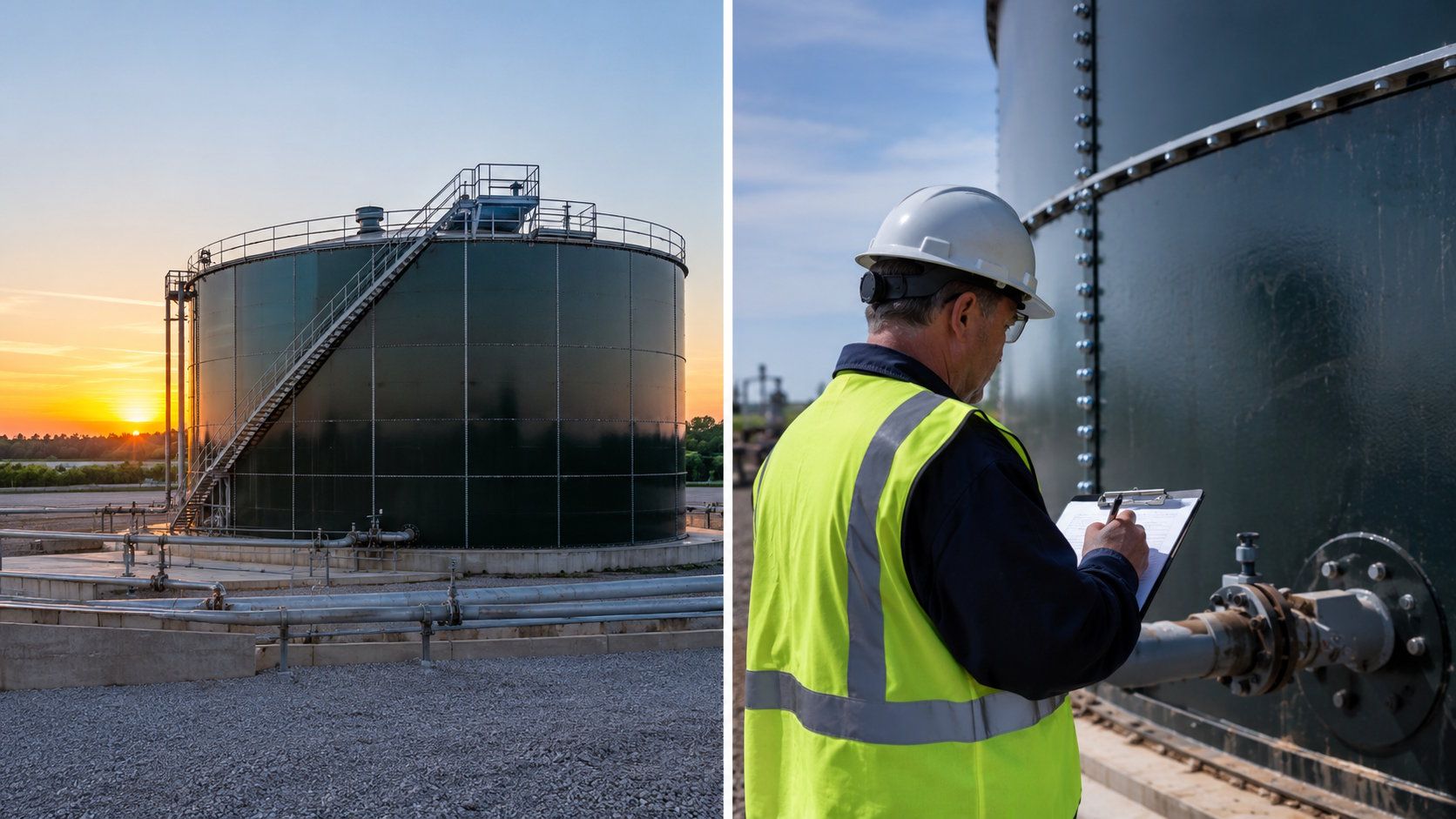
An oil tank inspection is a close, organized look at an aboveground storage tank. The process checks its condition, integrity, likelihood of leaking, and whether it's still fit to keep working.
The inspection can cover the shell, roof, foundation, connected piping, containment, and safety components, with everything documented so operators can make informed decisions about maintenance and whether the tank should remain in service.
Why Oil Tank Inspections Matter
Inspections catch surface corrosion, leaks, coating failure, settlement, structural distortion, containment problems, and deferred maintenance while they’re still small. This means before any of it turns into a safety issue, an environmental mess, or an operational headache.
Fixing a corroded shell course costs a fraction of what you’d spend on cleanup, downtime, and dealing with regulators after a release. A consistent inspection program also keeps tanks in service longer and reduces surprise outages, which is a big deal when that tank is right in the middle of your operation’s throughput.
Oil Storage Tank Inspection Checklist: What to Review
Tank Shell, Roof, and Exterior Condition
You start with the shell. Look for corrosion, pitting, dents, buckling, bulges, and any coating that’s breaking down. Stains or discoloration around welds, nozzles, and pipe connections may indicate an active or previous leak.
The shell-to-bottom junction needs a closer look than the rest. Wet spots or staining down there are a pretty reliable sign that something’s starting to go wrong in the weakest part of the tank.
The roof is next, and what you check depends on the type. Fixed roofs get examined for plate corrosion, weld condition, supports, penetrations, vents, and drains. If water is standing on it, or the roof is distorted or settling, it won’t shed water properly, and it won’t handle snow or people walking on it the way it should.
Floating roofs take more attention. You’re looking at the pontoons, deck plates, seals, drains, support legs, and anti-rotation gear. The roof has to rise and fall with the product level while still sealing reasonably well against the shell. Once it hangs up or the seal starts failing, product loss and emissions follow pretty quickly.
Appurtenances wrap up the exterior check. Nozzles, manholes, gauging hatches, vents, and flanges are all places leaks like to start. Check the reinforcement pads, welds, flange faces, gaskets, and bolts. Emergency vents, overfill protection, and the warning signs should be there and actually functional, not just present on paper.
Foundation, Settlement, and Drainage
Everything sits on the foundation, so anything moving down here moves everything above it. Inspectors look at the ringwall or pad for cracking, spalling, erosion, and displacement.
They also look for undermining, washout, and vegetation growing around the perimeter, all signs that water is getting where it doesn’t belong. Settlement is the quiet problem. Uneven settlement twists the shell, puts extra stress on the floor, and can crack welds over time.
When there’s clear evidence of movement, a settlement survey with precision leveling equipment is usually run and compared to API 653 limits. Tracking those readings across multiple inspections shows whether the movement is still progressing, which changes how urgently it needs to be dealt with.
Drainage around the tank base needs its own look. Water that pools next to the foundation speeds up corrosion on the bottom and can damage the pad itself. Inspectors confirm that the drainage setup is actually pushing water away from the tank and that the ground around the base isn’t holding product or water.
Piping, Valves, Containment, and Appurtenances
Inspectors check the piping for corrosion, how well the supports are holding up, and whether anything's leaking at joints and connections. Valves get looked at for operability, external condition, and any hint of seat leakage. Then there's the safety stack, including level gauges, high-level alarms, and overfill protection. Those get verified for correct setpoints and function, because when things go wrong, they're the layers standing between a bad day and a really bad one.
Secondary containment is the last line of defense before a release reaches the environment. Dikes, berms, and containment walls get checked for structural integrity and enough capacity to actually hold what they're supposed to. Containment drain valves should remain closed during normal operations and be managed according to site procedures and applicable requirements; inspectors confirm that's actually the case, not just the policy. Spill response equipment needs to be there, reachable, and usable. And when cathodic protection is installed on the tank bottom, it's checked to make sure it's running and doing its job.
Access structures matter for two reasons: safety and access. Stairways, platforms, and walkways get checked for corrosion, loose connections, and damaged grating. These aren't cosmetic. A compromised platform is a hazard to the people on it, and it can keep the next inspection from happening safely at all.
Internal Inspection and Thickness Testing
An external oil tank inspection checklist catches a lot, but not everything. Some problems, floor corrosion and underside thinning especially, stay hidden until the tank is out of service, drained, and cleaned. Only then can technicians get a direct look at the floor surface, bottom plates, floor-to-shell welds, annular plate condition, internal shell surfaces, and roof supports.
Ultrasonic thickness testing helps technicians send high-frequency sound waves through the steel to measure thickness without harming the tank. Readings taken on a grid pattern across shell courses, the roof, and the floor show where metal has been lost and can be used to calculate corrosion rates. Those rates feed straight into remaining life calculations and tell you when the next inspection is due. On tank floors, magnetic flux leakage scanning is often the tool of choice, since it catches underside corrosion that eyes alone would miss. Any suspicious areas get follow-up thickness measurements.
Depending on what turns up, more non-destructive testing may be warranted. Vacuum box testing helps detect leaks in floor welds. Magnetic particle testing picks up surface and near-surface cracks in welds. And liquid penetrant testing finds fine surface cracks where magnetic particle testing isn't practical.
How Often Should Oil Tank Inspections Be Performed?
Standards like API 653 and STI SP001 give you a framework of when and how to inspect an oil tank, but the actual intervals vary. A tank with a low, well-documented corrosion rate and a favorable inspection history may qualify for longer inspection intervals, subject to applicable standards. A tank that’s losing metal faster won’t. It helps to separate routine visual checks from formal inspections.
Operator rounds that include a walkaround of the tank exterior are usually daily or shift-based, and they’re good for catching sudden changes, like new staining or a damaged fitting. Formal inspections are more complete, documented evaluations done on a set schedule. Both have a role, and neither replaces the other.
What Happens After the Inspection?
An inspection without a clear report is just an opinion. The findings need to be written up in a report that outlines the tank’s condition, including thickness mapping for the floor, shell, and roof. Photos usually accompany the findings to support what was seen. Defects are sorted by severity and risk, so operators know which items need attention right away and which can just be monitored.
The report should also cover recommended repairs, any monitoring needed for issues that aren’t ready for action yet, and the timing of the next inspection. It needs to clearly state whether the tank can remain in service. That call matters because some findings mean the tank must come out of service until the repairs are completed, while others can be handled through regular planned maintenance.
Common Oil Tank Inspection Mistakes to Avoid
The most common mistake is treating the oil storage tank inspection checklist as the goal. Filling out the form isn’t the same as actually inspecting the tank. The point is to find problems, not to prove someone walked past it.
A few others show up regularly:
- Skipping the documentation. Without thickness readings, corrosion rates, and past findings on record, there’s no way to see if conditions are getting worse or to make solid decisions on intervals and repairs.
- Ignoring small leaks and stains because they look minor. They’re often the first sign that something’s starting to develop.
- Overlooking foundation movement because it’s slow and easy to explain away.
- Treating containment as a formality, even though it’s the barrier between a leak and an environmental release.
- Putting off repairs once defects are found. Waiting usually doesn’t make the work cheaper; it makes it more expensive.
Conclusion: A Good Inspection Protects Tank Integrity
Oil tank inspections go beyond routine visual walkarounds. When a certified inspector is involved and the findings are properly documented, operators gain something more valuable than a compliance record. They gain a clear picture of what they're maintaining and how much life it has left. That's what keeps tanks in service, keeps product contained, and keeps operations running without surprises.
FAQ
About the author

Energetic and dedicated Operations Leader with more than 20 years of demonstrated results driven experience in fast paced manufacturing environments. Proven skills in building and directing strong teams to achieve challenging objectives.
View all postsRecent Posts
How to Keep a Water Tank From Freezing: Tank Planning Guide
Choosing the Right Dry Bulk Storage Tank: 6 Key Questions
Grain Storage After Harvest: Control Moisture, Temperature & Airflow
What Is Water Conservation? Importance, Storage & Tanks